
5 Heart Failure Symptoms Most People Confuse With Getting Old [No. 4 Is Sneaky]
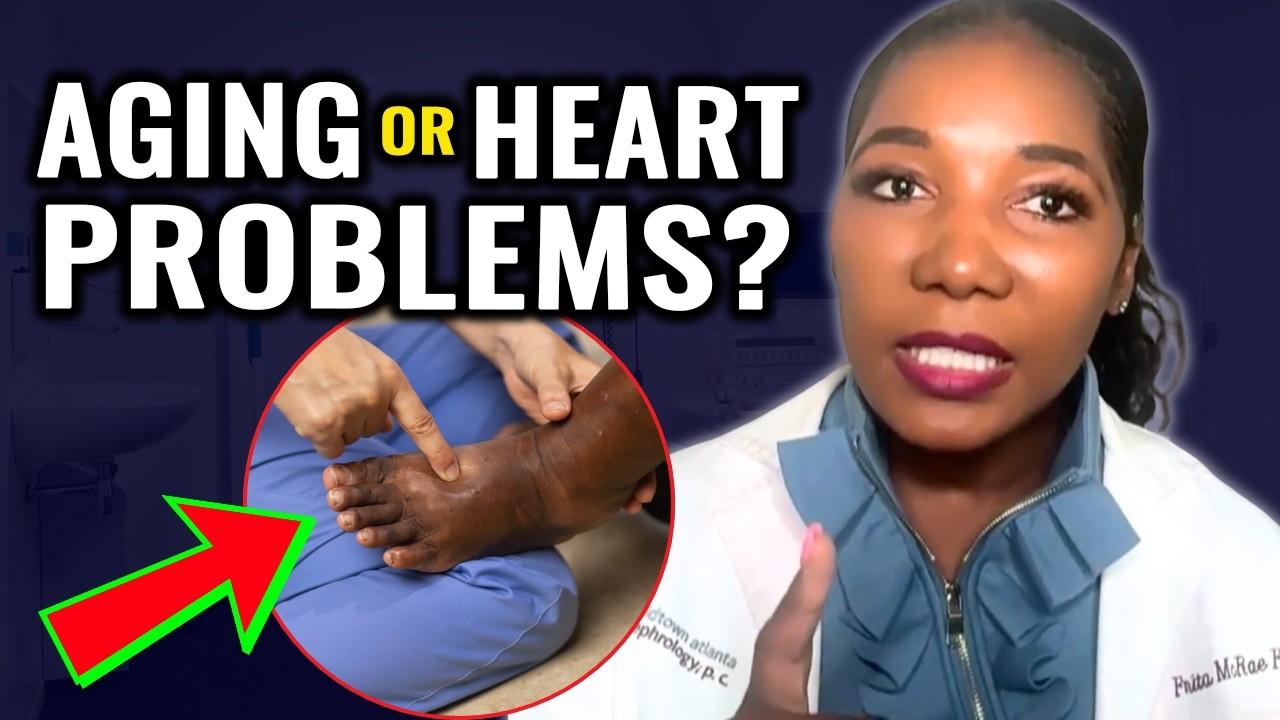
Why Heart Failure Gets Mistaken for Old Age
Have you been telling yourself that you are feeling tired just because you are getting older? That your ankles are looking puffy and swollen just because you have been on your feet all day? Have you been telling yourself that you are starting to feel winded when you go up the stairs just because you need to get back in the gym? I hear this from my patients all the time, and I need you to hear me right now because for many of you reading this, these are not just symptoms of normal aging. They might be heart failure symptoms.
I am Dr. Frita, a board-certified kidney and high blood pressure doctor, and I am walking you through five symptoms of heart failure that millions of people dismiss every single day as just getting older. Number four is the sneaky one. It is the symptom that almost no one connects to the heart.
What Is Heart Failure?
Heart failure is a condition where the heart muscle is no longer able to pump enough blood to meet the body's needs. According to the American Heart Association, approximately 6.7 million adults in the United States are currently living with heart failure. A leading risk factor is high blood pressure, also known as hypertension. Other risk factors include coronary artery disease, a previous heart attack, diabetes, and obesity. In advanced heart failure, some people may eventually need a heart transplant. But here is the encouraging truth: people with heart failure who catch it early have significantly more options. The signs and symptoms are there. You just have to know what to look for.
5 Most Common Heart Failure Symptoms and Warning Signs
Here is a quick summary of the heart failure warning signs and symptoms we are covering:
- Unexplained and persistent fatigue
- Shortness of breath during everyday activities (dyspnea)
- A persistent cough or wheezing at night
- Swelling in the legs, ankles, or feet (edema)
- Confusion or brain fog from lack of blood flow to the brain
These symptoms often show up together rather than alone, and that combination is one of the most important signals that the heart may need attention.

1. Unexplained and Persistent Fatigue
I am not talking about run-of-the-mill drowsiness. This is the type of fatigue that even an 18-hour sleep will not fix. When you have congestive heart failure, your heart pump is not working efficiently. It is not getting all of that blood flow and oxygen to your muscles. So what happens? Your body prioritizes and it makes sure that you have the best of your blood flow and your oxygen in your brain and in your heart. Unfortunately, your muscles and tissues get the short end of the stick. This is what makes your muscles, your arms, and your legs feel really heavy and what makes you feel extremely tired. It can be a signal of heart failure.
According to the Journal of the American College of Cardiology, unexplained fatigue is one of the earliest and most consistent symptoms of heart failure. This is a symptom that often shows up months before a formal diagnosis is made. This time matters because early intervention gives you better results.
Red Flags That Fatigue Could Be A Sign of Heart Disease or Heart Failure
There are a million reasons for people to have fatigue, especially people in their 50s, 60s, and 70s who are balancing jobs, family life, and other health conditions. You can always explain fatigue away until you cannot. Here are the red flags: fatigue that is not improving with rest, fatigue that is getting worse over time, and fatigue that is paired with any of the other symptoms on this list. Have you been getting worsening fatigue that is not really explained over the past six to twelve months? Even a gradual worsening of fatigue can be just as medically significant as a sudden one. Talk to your doctor and make sure that you do not have heart failure.
2. Shortness of Breath During Everyday Activities (Dyspnea)
If you find yourself getting winded or short of breath doing everyday activities that you used to do, this is not necessarily a fitness problem or a problem of you being deconditioned. It might be a heart problem. If you find yourself getting really short of breath going up one flight of stairs, it could be a heart problem. If you find yourself getting short of breath in the middle of a sentence during a phone conversation, it could be a heart problem. If you find yourself having to stop halfway between the car and the front door while carrying groceries, it could be an early stage of heart failure.
Many people dismiss shortness of breath as just needing to work out. There is such a thing as deconditioning, but here is the difference: if you are short of breath due to deconditioning, it should be getting better with moderate exercise over a matter of months. If the shortness of breath is due to heart failure, it is not going to get better with exercise.
Why This Is Not Just a Fitness Problem
With left-sided heart failure specifically, you get a backup of blood that backs up into your pulmonary veins, goes to your lungs, and causes fluid in the lungs, or pulmonary edema. That shortness of breath might get even worse when you are lying down flat. This is called orthopnea. When you lie down flat, that fluid often redistributes and finds itself in your lungs, which is why many people with congestive heart failure need to sleep on two or three pillows or even sitting up. Do not dismiss shortness of breath as just getting older or as deconditioning. Talk to your doctor and specifically ask about ordering an echocardiogram and a BNP or pro-BNP to evaluate your heart health properly.

3. A Persistent Cough or Wheezing at Night
This one surprises my patients every single time. When people come in with a cough at night, they typically ask for cough drops or allergy medicine because they think they have post-nasal drip. They might even think they have reflux or heartburn. But a persistent nighttime cough can be a symptom of heart failure that has nothing to do with allergies or heartburn.
When the left side of the heart is not pumping well, fluid backs up into the pulmonary veins and causes irritation. You get a cough that is dry, persistent, and worse at night when you are lying down flat. In more severe cases of congestive heart failure, you might produce a pink, frothy mucus, which is a definite sign that it could be congestive heart failure. For some people, it gets so bad it will wake them up at night, and they have to sit up and gasp for air.
The tell-tale sign that a cough is cardiac rather than respiratory is that it will not get better with cough drops, reflux medicine, or allergy medicine. If the cough is linked to any of the other symptoms of heart failure, you need an urgent conversation with your doctor, not a trip to the pharmacy. Studies published by the American Heart Association have documented that women are more likely than men to dismiss cardiac symptoms as deconditioning or anxiety, which can delay diagnosis and treatment.
4. Swelling in the Legs, Ankles, or Feet (Edema)
This is No. 4, and it is the sneaky one. Getting swelling can be pretty common. People might say it is because they have been on their feet all day or had too much salt, and they dismiss it. But having swollen feet, ankles, or legs can be a very serious sign of heart failure and it definitely needs to be managed. I am a board-certified kidney doctor, so I definitely see this.
When you have congestive heart failure, and the heart is not pumping the way that it should, you get a backup of blood. When the right side of the heart is no longer able to pump well, that backup is in your venous system, and this increased pressure in the veins leads to swelling in your tissues. Gravity pulls that swelling into your legs, ankles, and feet, and it gets worse by the end of the day. Here is the conundrum: when the heart is not pumping well, the kidneys are not getting the proper blood flow and oxygen they need. When the kidneys do not get what they need, they start retaining salt and water, making the swelling significantly worse.
With congestive heart failure, the swelling is typically in both legs. If only one leg is swollen, consult with your doctor right away because that could be a sign of a DVT or blood clot, which is an emergency. If you take a finger and press down on the skin of the swollen leg or foot, and you still see the indentation after you lift your finger, that is called pitting edema. Ask for an echocardiogram, ask for that BNP, and ask for a chest X-ray if you are having other symptoms. Whatever you do, do not ignore these symptoms. This is one of those sneaky signs of heart failure you do not want to ignore.
5. Confusion or Brain Fog (Lack of Blood Flow to the Brain)
This one is going to surprise you. Confusion can be a symptom of heart failure, and I can see why it gets dismissed as aging. I am not talking about forgetting where your phone is. I am talking about forgetting what you were going to say mid-sentence. I am talking about walking into a room and having no idea why you are there. I am talking about tasks that used to be really easy for you, like cooking or writing a check, and now you do not know what is going on.
Patients and even doctors will sometimes say you are getting a little older and some cognitive decline is expected. But when confusion or brain fog is due to heart failure, it is often paired with other symptoms such as fatigue, shortness of breath, and swelling. Risk of heart failure include high blood pressure or hypertension, coronary artery disease, a previous heart attack, diabetes, and obesity. You have to put the puzzle pieces together. If someone has confusion plus other symptoms and a known history of heart disease, make sure you do not miss treating heart failure, because addressing it can actually improve the confusion when confusion is a symptom of heart failure.
Conclusion
These are five of the top heart failure symptoms that most people dismiss as just getting older: unexplained and persistent fatigue, shortness of breath, a nighttime cough, swelling of the feet, ankles, and legs, and confusion or brain fog. If you are having these symptoms, make sure you talk to your doctor right away. Do not dismiss them as just getting older. Your body is giving you signals, and this article is meant to help you pick them up, read them, interpret them, and get help before heart failure may progress to an advanced stage.
Share this post with the people you care about and drop your questions in the comments below. As always, do your best to live your healthiest, happiest life.

Not only is she the founder and president of a successful nephrology practice (Midtown Atlanta Nephrology, P.C.) and the medical director of a non-profit dialysis unit (DCI), but she has also made it her mission to provide accessible medical advice to everyone. With over half a million subscribers on her YouTube channel, appearances on popular television shows like HLN Weekend Express and Fox News Live, and the Emmy Award Winning Paternity Court, Dr. Frita is dedicated to helping people understand their health with ease.
Additionally, she has been an active board member of the National Kidney Foundation since 2014 and the author of Under Pressure - A Guide to Controlling High Blood Pressure; not to mention her Healthy Happy Life Podcast!
Truly dedicated to helping others learn more about their health, Dr. Frita continues her mission to educate individuals about living their happiest and healthiest lives.
- How To Clear Blocked Arteries Without Surgery - November 10, 2026
- 7 Lisinopril Side Effects Every Blood Pressure Patient Should Know - November 10, 2026
- 5 Heart Failure Symptoms Most People Confuse With Getting Old [No. 4 Is Sneaky] - October 21, 2026